Event | Responding to ‘Scholasticide’ in Gaza: The Role of the UK International Education and Training Community
Fobzu would like to invite you to register for an upcoming conference titled Responding to ‘Scholasticide’ in Gaza: The Role of the UK International Education and Training Community, held in collaboration with UKFIET, the Centre for International and Comparative Education (CIRE) at the University of Bristol, and the Research for Equitable Access and Learning (REAL).
Title: Responding to ‘scholasticide’ in Gaza: The Role of the UK International Education and Training Community
Date: Monday, 18 November 2024
Time: 10:00 am – 3:30 pm
📍In London and online
[button link=”https://www.tickettailor.com/events/ukfiet/1399229″] REGISTER HERE[/button]
Aims and Objectives of the event
- To hear first-hand from representatives of Palestinian education institutions in Gaza and Palestinian experts in the field about the background, nature and extent of the crisis in Gazan education and their priorities for international assistance.
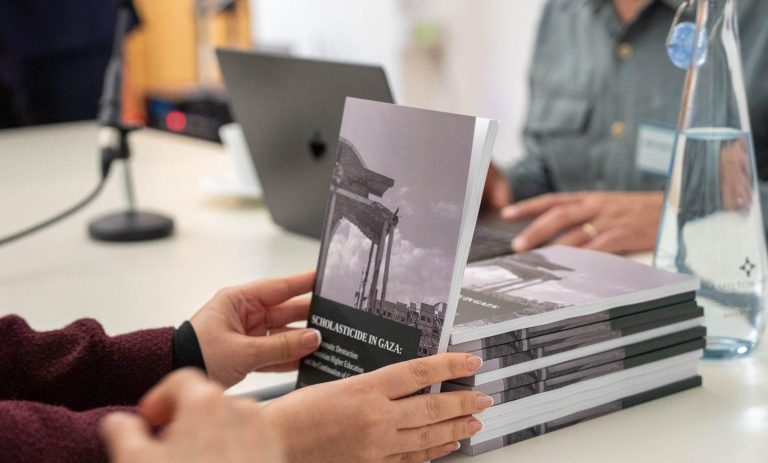
- To launch a report on the crisis in schooling in Gaza and to hear updates from the Emergency Committee for Universities in Gaza.
- To consider how the UK international education and training community can best respond to the immediate needs of learners and educators in Gaza and how the community can contribute to the longer-term reconstruction of the education system in Gaza in partnership with Palestinian education institutions.
Background
Israel’s war in Gaza has led to the loss of tens of thousands of Palestinian lives and has created an unprecedented humanitarian crisis. UN experts have warned of ‘scholasticide’ in Gaza, a term that has been used to describe the systematic destruction of an education system and its institutions. In Gaza, 17 years of blockade combined with recurrent war have damaged and destroyed an already fragile education infrastructure: increasing pressure on education facilities, disrupting education provision, and impacting the psychosocial wellbeing of children and teachers.
According to the Ministry of Health, as reported by the UN Office for the Coordination of Humanitarian Affairs, more than 10,449 school students of various grades have been killed, along with more than 400 teachers. Many have been killed in schools, which have been turned into shelters for displaced Palestinians since the war began. According to UNICEF, 93 per cent of Gaza’s 560 school buildings have been either destroyed or damaged since 7 October 2023. About 340 have been directly bombed by the Israeli army. They include government and private schools and those run by UNRWA itself. More than 625,000 students have been deprived of schooling since 7 October. The situation in higher education is equally bleak. All 12 university buildings in Gaza have been destroyed, while thousands of students and teachers have been killed, among them some of Palestine’s most prominent scholars.
The international response to the school crisis is coordinated by the Occupied Palestinian Territory Education Cluster, which is co-led by UNICEF and Save the Children. The Cluster has been playing an important role in advocating for education as an integral part of the humanitarian response. Along with UNRWA and other actors active in supporting education in Gaza, the Cluster seeks to ensure that children and youth can resume their right to learn as soon as possible. They coordinate all education actors to do everything possible during the current hostilities to plan for reconstructing the education system as soon as there is a permanent ceasefire, and then will support the effective resumption of education in Gaza as soon as hostilities stop.
Particular attention is needed to the support that teachers and counsellors need, in the light of the effects of the war on their own wellbeing, as well as the differentiated and additional support that children and young people need, given the trauma they are facing, as well as the larger number of war-induced disabilities, along with other vulnerabilities.
Responding to a historic call by Gaza academics and administrators for urgent support to reopen their universities and resume teaching, the three largest public universities in the Strip established the Emergency Committee for Universities in Gaza to coordinate the international response. The Committee has identified several priorities for international support based on the principle of partnership with Gaza’s universities. These include public pledges to rebuild the demolished universities in Gaza, immediate support for online instruction, student scholarships so students can continue their studies at their home universities, exiled student support, Faculty Fellowships and research cooperation.